As commercial energy markets become more volatile, solar alone is no longer enough. Electricity demand charges are rising. Grid instability is increasing. Utility rate structures are becoming more complex. For commercial and industrial operators, the question is no longer whether to adopt solar, but how to maximize its financial performance. Battery Energy Storage Systems, commonly referred to as BESS, are quickly becoming the missing link in commercial solar ROI.
Why Solar Alone Is No Longer Sufficient
Traditional commercial solar systems are designed to reduce energy consumption from the grid during daylight hours. While this lowers kilowatt-hour costs, it does not fully address:
• Peak demand charges
• Time-of-use rate volatility
• Grid outages
• Curtailment risks in constrained markets
In many utility territories, demand charges represent 30 to 70 percent of a commercial facility’s electricity bill. Solar production does not always align perfectly with peak demand windows. That misalignment leaves money on the table.
BESS solves that gap.
What Is a Battery Energy Storage System
A Battery Energy Storage System stores excess electricity, either generated onsite from solar or drawn from the grid during lower-cost periods. That stored energy can then be discharged strategically.
In commercial applications, BESS is typically deployed to:
• Reduce peak demand charges through peak shaving
• Shift energy use away from high-cost time-of-use periods
• Provide backup power for critical operations
• Improve grid resilience
• Enhance the financial performance of solar assets
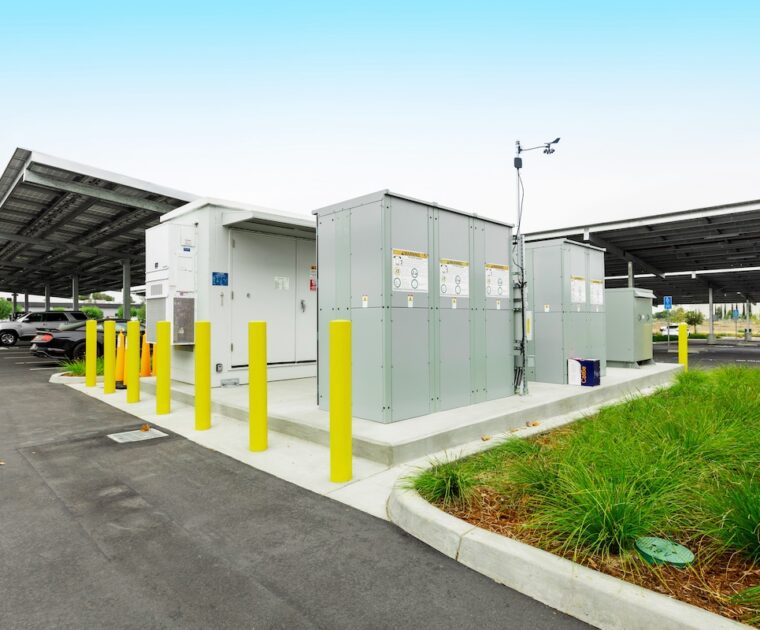
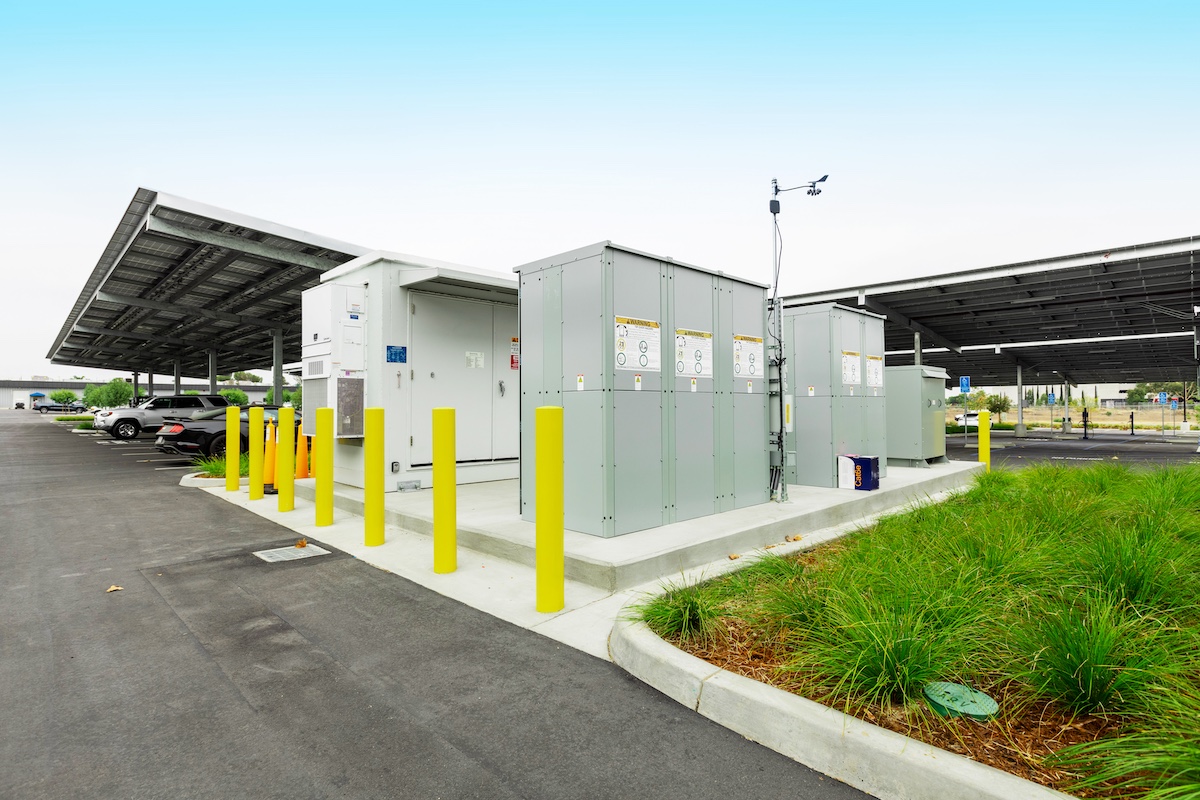
Modern systems are containerized, utility-grade installations integrated with advanced power control systems.
What Commercial BESS Infrastructure Looks Like
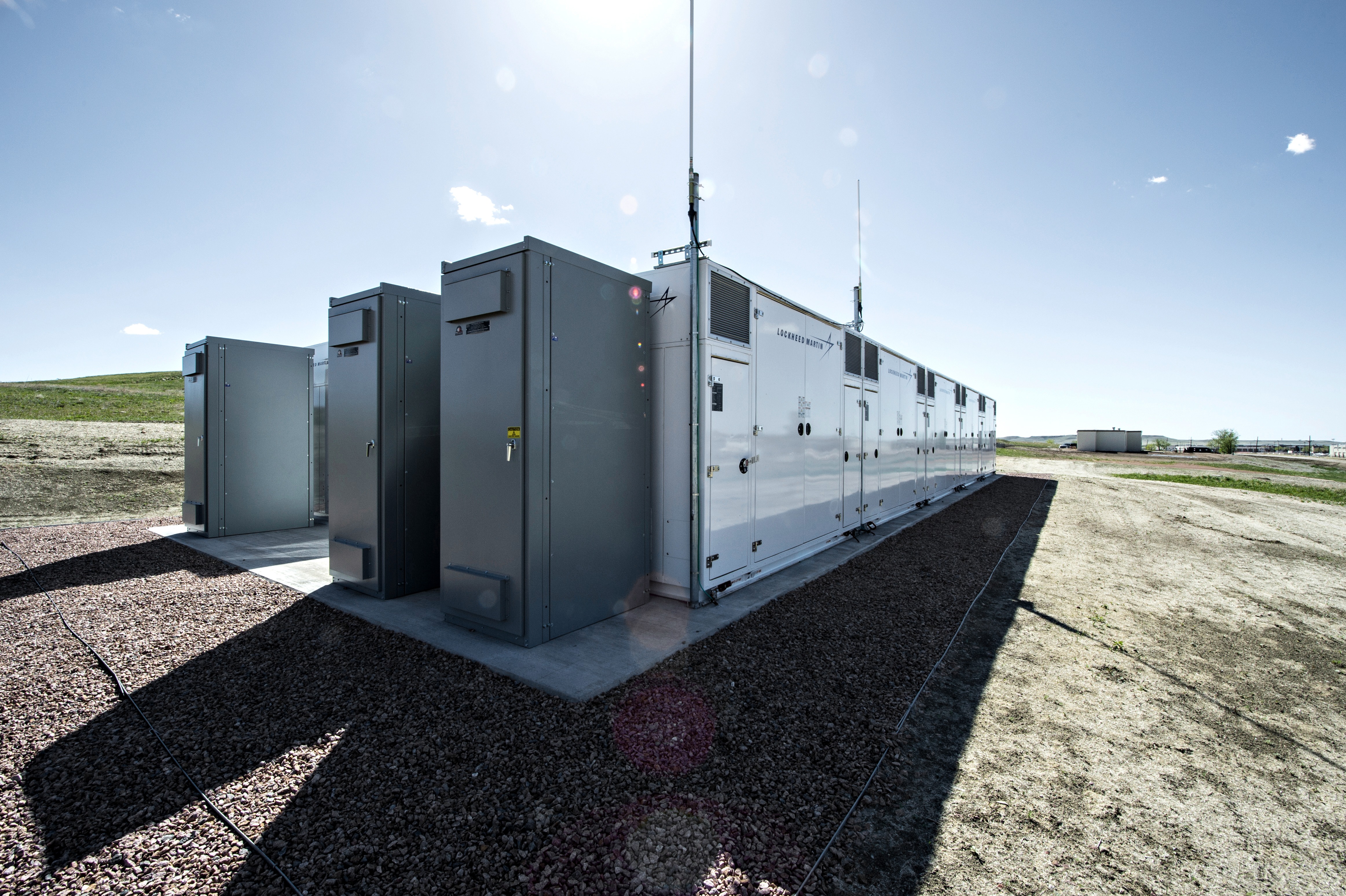
These systems are engineered for long-term performance, safety, and grid interconnection compliance, making them suitable for industrial facilities, distribution centers, campuses, and utility-scale developments.
The Financial Impact: Where the ROI Accelerates
The integration of storage significantly improves project economics.
1. Demand Charge Reduction
By discharging during peak demand intervals, BESS can reduce a facility’s peak load profile. In many markets, this directly lowers the most expensive portion of the utility bill.
Depending on load characteristics, demand reductions of 20 to 40 percent are achievable.
2. Energy Arbitrage
In time-of-use rate environments, storage allows facilities to charge batteries during lower-cost hours and discharge during higher-cost windows, capturing margin from utility rate differentials.
3. Enhanced Solar Investment Tax Credit Qualification
When properly structured, storage systems paired with solar may qualify for federal Investment Tax Credit benefits, improving overall project returns and accelerating payback.
4. Improved IRR and Shorter Payback
When modeled correctly, integrated solar plus storage projects frequently demonstrate:
• Higher internal rates of return
• Reduced revenue volatility
• Greater long-term asset value
• Stronger financing structures
For energy-intensive commercial operators, this translates into more predictable operating margins.
Why Timing Matters Now
Several market conditions are accelerating adoption:
• Increasing grid congestion in major U.S. markets
• Utility interconnection backlogs
• Corporate ESG mandates and Scope 2 reduction targets
• Continued volatility in wholesale energy markets
Early adopters are securing interconnection positions and maximizing incentive windows before further regulatory tightening or incentive step-downs occur.
Waiting carries opportunity cost.
Integrated Development Matters
Battery systems are not standalone add-ons. They require careful load analysis, interconnection modeling, financial structuring, and long-term asset management planning.
At Energyware, integrated solar and storage solutions are developed through a comprehensive framework that includes:
• Utility-scale and commercial solar development
• Battery Energy Storage System design and integration
• Power Purchase Agreement structuring
• EPC and construction management
• Long-term ownership and asset management
The objective is not simply to install equipment, but to optimize financial performance across the lifecycle of the asset.
The Strategic Advantage of Solar Plus Storage
For commercial and industrial operators, energy is no longer just an expense. It is a controllable financial variable.
Solar reduces consumption.
Storage optimizes cost timing.
Together, they create a resilient, financially engineered energy strategy.
Organizations that integrate storage into their solar investments are not only reducing expenses, they are stabilizing long-term operating costs and strengthening balance sheet predictability.
Evaluating the Opportunity
Every facility has a unique load profile and utility rate structure. The financial case for storage depends on:
• Demand charge composition
• Time-of-use pricing
• Load variability
• Interconnection constraints
• Available incentives
A detailed technical and financial analysis is required to determine optimal system sizing and structure. Energyware evaluates solar plus storage opportunities through comprehensive modeling designed to maximize long-term returns while maintaining operational reliability. If your organization is considering solar, it may be time to evaluate whether storage should be part of the strategy. The difference in long-term value can be significant.
Ready to Evaluate Solar Plus Storage for Your Facility?
Energyware provides comprehensive technical and financial modeling to determine whether an integrated solar and battery strategy can improve your operating margins and long-term energy stability.
Contact Energyware to schedule a consultation and receive a tailored assessment of your facility’s energy profile.